
Making Science Fun Through Hands-On Learning
Making Science Fun Through Hands-On Learning Science is all around us—from the way plants grow and rain falls to the technology we use every day. Yet for many c
Aalgorix World Academy
Making Science Fun Through Hands-On Learning
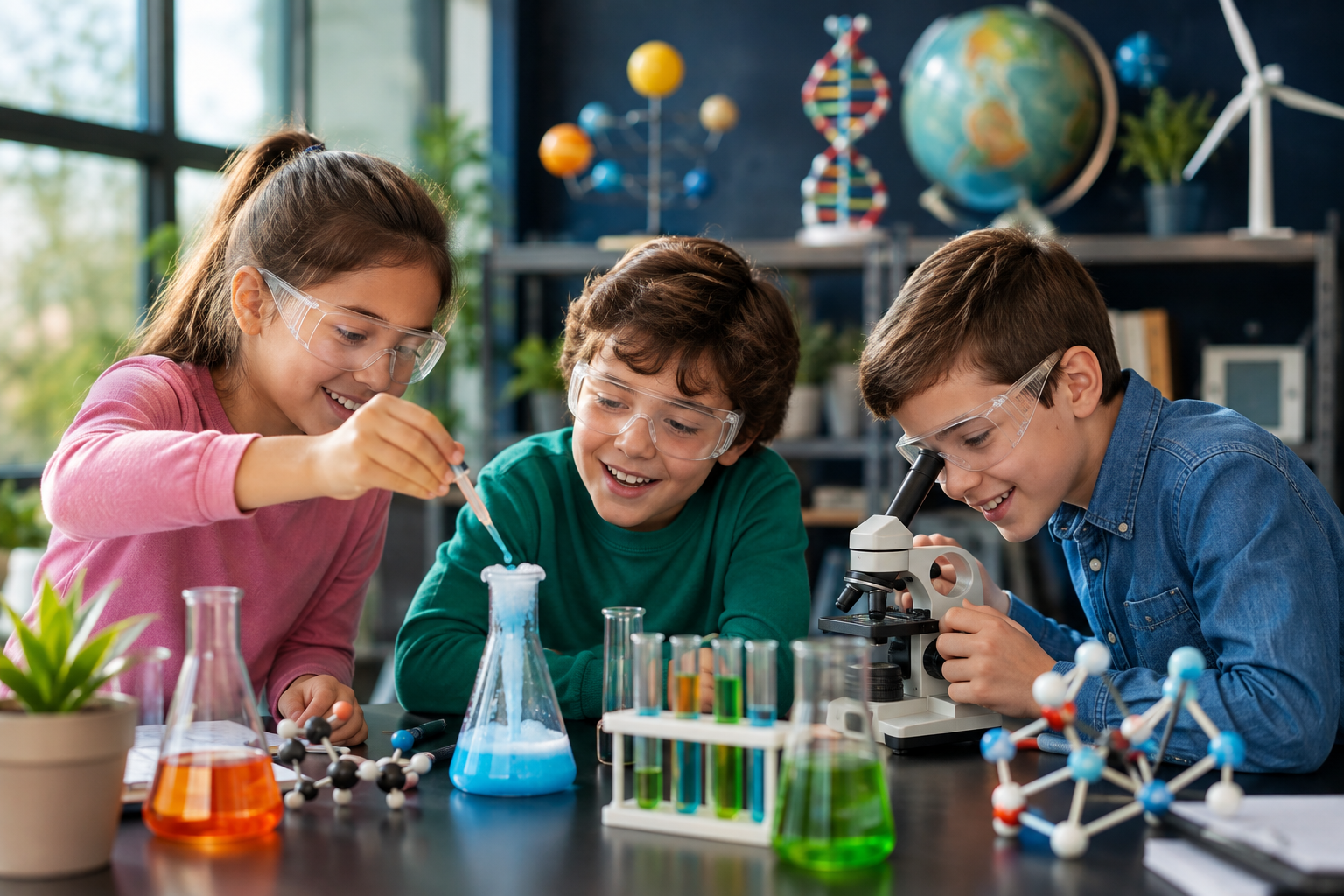
Science is all around us—from the way plants grow and rain falls to the technology we use every day. Yet for many children, science can feel like a subject filled with difficult concepts and lengthy textbooks. The good news is that science doesn't have to be learned only by reading. When children can explore, experiment, and discover things for themselves, learning becomes exciting and memorable.
Hands-on learning transforms science from a subject into an adventure. By encouraging children to observe, ask questions, and conduct simple experiments, parents and educators can help them develop a genuine love for science that lasts a lifetime.
Why Hands-On Learning Matters
Children learn best by doing. Instead of memorizing facts, they understand scientific concepts more deeply when they can see them in action. Building a simple volcano, growing a plant from a seed, or creating a homemade weather station teaches lessons that are difficult to forget.
Hands-on activities also make learning interactive. Rather than being passive listeners, children become active participants in their education.
Benefits of Hands-On Science Activities
Encourages Curiosity
Children are naturally curious. Hands-on experiments inspire them to ask questions like:
Why does this happen?
What will happen if I change something?
Can I make it work differently?
This curiosity forms the foundation of scientific thinking.
Improves Problem-Solving Skills
Science experiments don't always work the first time—and that's okay. Children learn to observe, adjust, and try again. These experiences teach persistence, logical thinking, and creative problem-solving.
Builds Confidence
Successfully completing an experiment gives children confidence in their abilities. Even small discoveries help them realize that learning can be fun and rewarding.
Makes Complex Concepts Easier
Concepts like gravity, magnetism, electricity, or the water cycle become much easier to understand when children can see them in real life rather than only reading about them.
Simple Hands-On Science Activities at Home
Parents don't need expensive laboratory equipment to teach science. Many exciting experiments use everyday household items.
1. Grow a Plant
Plant a seed in a small pot and observe its growth each day.
Children learn about:
Plant life cycles
Photosynthesis
Responsibility
Observation skills
2. Baking Soda Volcano
Create a volcano using baking soda and vinegar.
Children discover:
Chemical reactions
Cause and effect
Observation techniques
3. Floating and Sinking Test
Fill a bowl with water and test different household objects.
Children learn:
Density
Prediction skills
Scientific observation
4. Rainbow in a Glass
Layer colored sugar water with different concentrations.
Children understand:
Density
Liquids
Scientific measurement
5. Homemade Weather Station
Record daily temperature, rainfall, wind, and cloud patterns.
This activity teaches:
Weather observation
Data collection
Pattern recognition
The Importance of Asking Questions
Science isn't just about getting the correct answer—it's about asking great questions.
Encourage children to think by asking:
What do you think will happen?
Why do you think that happened?
What could we try differently?
What did we learn from this experiment?
These conversations help children think like scientists.
Combining Science with Technology
Modern technology makes science learning even more engaging. Educational videos, interactive simulations, virtual laboratories, and AI-powered learning platforms allow children to explore scientific concepts in exciting new ways.
An AI learning companion can provide age-appropriate explanations, answer questions instantly, generate quizzes, and recommend experiments based on a child's interests. This personalized approach keeps students motivated while ensuring they understand each concept before moving on.
Tips for Parents
You don't need to be a science expert to inspire your child. Here are a few simple tips:
Encourage exploration rather than memorization.
Celebrate mistakes as learning opportunities.
Let children make predictions before each experiment.
Ask open-ended questions.
Keep activities fun and pressure-free.
Connect science lessons to everyday life.
Learning Beyond the Classroom
Science exists everywhere—in the kitchen, the garden, the park, and even during a walk around the neighborhood. Observing insects, watching clouds, cooking meals, or recycling household items all provide opportunities to discuss scientific concepts.
The more children connect science to real life, the more meaningful their learning becomes.
Conclusion
Hands-on science learning transforms education from simply reading facts to discovering how the world works. By experimenting, observing, and asking questions, children develop curiosity, confidence, and critical thinking skills that benefit them far beyond the classroom.
Whether it's growing a plant, building a simple experiment, or exploring nature, every activity helps children become lifelong learners. When combined with modern AI-powered educational tools, hands-on learning creates an engaging, personalized experience that makes science enjoyable, practical, and inspiring for every child.